Turkey vs Mexico for Dental Implants: A US Patient Guide
If you need one or two implants and you live within driving distance of the southern border, Mexico is almost certainly the better choice. If you need a full arch or a full-mouth reconstruction, the calculation shifts and Türkiye becomes competitive. If you live in the northeast and need a single crown, the honest answer is that neither option is likely to be worth the trip.
We publish this from Türkiye, so take the framing for what it is. But a comparison that concludes "we win on everything" is not a comparison, and you would be right to distrust one. Below is an attempt at the version that is actually useful: where each destination genuinely has the advantage, and how to work out which side of the line your own case falls on.
Why this comparison exists
For American patients, Mexico is the default and Türkiye is the alternative. That is the reverse of the situation in the UK and Germany, where Türkiye is the default. The reason is geography, not quality: US and Canadian patients frequently cross the border into Mexico, while UK patients take a short flight to Türkiye.
The cost pressure driving the question is the same in both directions. Approximately 69 million US adults — about 26% — have no dental insurance, and most plans that do exist cap annual benefits between $1,000 and $2,000. A 2026 CareQuest Institute report found that roughly 4% of US adults, nearly 9.6 million people, have travelled abroad for dental care at some point, with 58% citing cost as the primary reason.
Side by side
| Mexico | Türkiye | |
|---|---|---|
| Travel from the US | Short flight, or a drive across the border to Los Algodones or Tijuana | 10–12 hours, typically direct to Istanbul |
| Return visit for staged treatment | Practical — a few hundred dollars and a day | A second long-haul trip |
| Return visit under warranty | Practical | A significant undertaking |
| Published single-implant range | roughly $600 – $1,800 | roughly $400 – $1,400 |
| Published All-on-4 range, per arch | roughly $8,000 – $15,000 | roughly $6,000 – $12,000 |
| Implant systems available | Straumann, Nobel Biocare, Osstem and comparable systems are stocked in both countries at top clinics | Same |
| Language | English widely spoken in border clinics | English-speaking coordination standard at clinics serving international patients |
| Time zone vs US | Same or adjacent | 7–10 hours ahead |
| Regulatory verification | Varies by state and facility | Ministry of Health facility licence plus a mandatory International Health Tourism Authorisation Certificate; dentists registered with the Turkish Dental Association |
Published price ranges are compiled from third-party 2026 cost guides and are market estimates, not quotes. Actual cost depends on your case, the clinic, materials and implant system.
Two things stand out from that table, and they matter more than the price columns.
The implant brands are the same. Both countries' quality clinics stock the same major global systems. Anyone telling you one country has access to better hardware is selling something. What differs is whether a given clinic uses a documented system at all — and that is a clinic-level question, not a country-level one.
The price gap between the two is narrower than the gap from either to the US. Compared with published US ranges of $3,000–$7,000 for a single implant and $15,000–$25,000 per arch for an acrylic All-on-4, both destinations sit far below. The Türkiye-versus-Mexico difference is real but modest. It is not, on its own, a reason to fly twice as far.
Where Mexico has the advantage
Single implants and small cases. The saving on one tooth is a few thousand dollars at most. A transatlantic flight, a week of hotel nights and time off work will eat a large part of that. A drive to Los Algodones will not.
Anything that needs a return visit. This is the decisive factor and it deserves more weight than it usually gets. Conventional implant treatment is staged: the implants are placed, then the bone integrates over roughly three to six months before the final restoration is fitted. If you need warranty work two years later — an implant failing to integrate is an accepted biological risk of a few percent — you have to go back to the clinic that did the work. From Phoenix, going back to Tijuana is a day. Going back to Istanbul is not.
Complex or medically involved cases. Severe bone loss, uncontrolled diabetes, heavy bruxism, or anything where the plan may change mid-treatment. Proximity to your surgeon is worth more than a price difference when the plan is uncertain.
If you are anxious about the logistics. This is not a clinical criterion, but it is a real one. Post-operative discomfort on a two-hour flight is different from post-operative discomfort on an eleven-hour one.
Where Türkiye has the advantage
Large full-arch and full-mouth cases. When the total is measured in tens of thousands of dollars, a $1,500 travel premium stops being the deciding variable. This is the category where the absolute difference is large enough to matter.
Cases suited to single-trip completion. Where immediate-loading protocols are clinically appropriate, a full arch can sometimes be placed and temporarily restored in one stay — which removes the two-trip disadvantage that otherwise favours Mexico. Whether you are a candidate is a clinical judgement that requires imaging. Do not accept a promise of single-trip completion before a clinic has seen your CBCT.
Regulatory verifiability. This is a narrow but genuine advantage and it is not about quality of care — it is about your ability to check. Since 2023, any clinic in Türkiye treating international patients must hold an International Health Tourism Authorisation Certificate issued by the Ministry of Health, in addition to its facility licence. Individual dentists must be registered with the Turkish Dental Association (TDB), which maintains a public register. That gives you two specific, named documents to request and verify before you pay anything. Comparable checks exist in Mexico but are less uniform across states and facility types.
Combining treatment with a genuine trip. If you were going to travel anyway, the arithmetic changes. This is a weaker argument than clinics make it sound — you will spend a meaningful share of the week in a dental chair — but it is not nothing.
How to decide: a short decision path
Work through these in order.
1. How many implants and how many arches? One or two implants → Mexico, or treatment at home. One arch or more → both are in play.
2. Can your case be completed in one trip? You cannot answer this yourself. Send your panoramic X-ray or CBCT to two or three clinics and ask each, in writing, how many visits their plan requires and why. If the answers differ substantially, that difference is informative.
3. What is the total, not the per-unit price? Itemized quote plus flights plus accommodation plus time off work plus a 15–20% contingency for procedures identified after imaging. Do this for both destinations and for staying home.
4. Where will you get aftercare? Ask a local dentist, before you travel, whether they will maintain implants placed abroad and what they will need from you. Most will, given complete records. This question is the same regardless of destination.
5. What happens if it fails? Read the written warranty. Ask specifically who pays for travel in a revision scenario. The answer is often "you," and that is fine — but it should be priced into the decision rather than discovered later.
What to watch out for — in both countries
The failure modes are not country-specific. They are clinic-specific, and they look the same in Antalya and in Tijuana.
Unbranded implant systems. A documented system from a major manufacturer means the components are made to a published standard, the parts still exist in ten years, and a dentist at home can identify what is in your jaw and order the right abutment. An unbranded implant can leave your local dentist with no practical way to help. Ask for the brand, the model, and the lot numbers, and ask for them in writing before treatment.
Over-treatment. Concerns have been raised within the industry about clinics placing crowns or veneers on teeth that needed neither. A useful safeguard: get a written treatment plan from a dentist at home first, then compare it against the plan you are offered abroad. If the overseas plan proposes substantially more invasive treatment to achieve the same goal, ask why — in writing.
Compressed timelines. A plan that treats a whole mouth in three days is doing something that would normally be staged across months. Sometimes that is a legitimate immediate-loading protocol. Sometimes it is not. The way to tell the difference is to ask the clinic to explain the clinical reasoning, and to have a second dentist read the answer.
Going home with no paperwork. One of the most commonly reported problems is not surgical at all: patients return with no treatment notes, no X-rays, no implant documentation and no written warranty. Collect all of it before you leave the clinic. It is far harder to obtain afterwards.
Quotes that are not itemized. If the quote is a single number, you do not know whether it includes extractions, imaging, grafting, the temporary prosthesis, or the final prosthesis — and you cannot compare it to anything.
Responsiveness before versus after payment. A WhatsApp number that answers in ninety seconds before the deposit and goes quiet afterwards is a documented pattern. Ask, before you pay, how aftercare enquiries are handled and by whom.
Frequently asked questions
Is one country safer than the other? Clinical outcomes depend on the surgeon's skill, the materials used and the treatment planning — not on which country the chair is in. The meaningful safety question is how thoroughly you can verify a specific clinic, which is why the documentation checks above matter more than the destination.
Will my US dental insurance cover either? Most US dental plans do not cover procedures performed outside the country. Some reimburse a portion against an itemized invoice. Check your plan documents first.
Can I use HSA or FSA funds? Medical care received in a foreign country is generally eligible under the same IRS rules that apply to domestic care, though purely cosmetic procedures are excluded. This is worth checking with your plan administrator before you travel, because it can change the effective cost of either option.
What about Costa Rica, Colombia, Hungary, Thailand? All are established destinations with their own trade-offs. The framework in this article — total cost including travel, trip count, verifiability, aftercare plan — applies to any of them.
The summary
If your case is small, stay close to home: treat in the US if you can manage it, or look at Mexico. If your case is large, both destinations are worth quoting, and the deciding factors will be trip count, the written warranty, and how thoroughly you can verify the specific clinic.
What should not decide it is a headline percentage. Get two itemized quotes, add the travel column honestly, and compare the totals.
Compare verified clinics on DentOfind →
Important notices
This is not medical advice. This article is general information and is not a substitute for an in-person dental assessment. Whether a particular treatment or treatment protocol is suitable for you can only be determined by a qualified dentist who has examined you and reviewed your imaging. Outcomes vary between individuals.
Costs shown are published market ranges. Figures are compiled from publicly available 2026 cost guides and published averages, provided for orientation only. They are not quotes and not an offer.
About DentOfind. DentOfind is an online marketplace that lists independent dental clinics in Türkiye. DentOfind is not a healthcare provider, does not provide dental treatment, and does not provide accommodation, transport, or transfer services. All treatment is provided by independent clinics under their own responsibility and their own licences. DentOfind does not list clinics in Mexico and has no commercial relationship with any clinic mentioned or implied in this comparison.
Medically reviewed by the dentist team of dentofind. Last updated: September 2026. Questions or corrections: info@dentofind.com
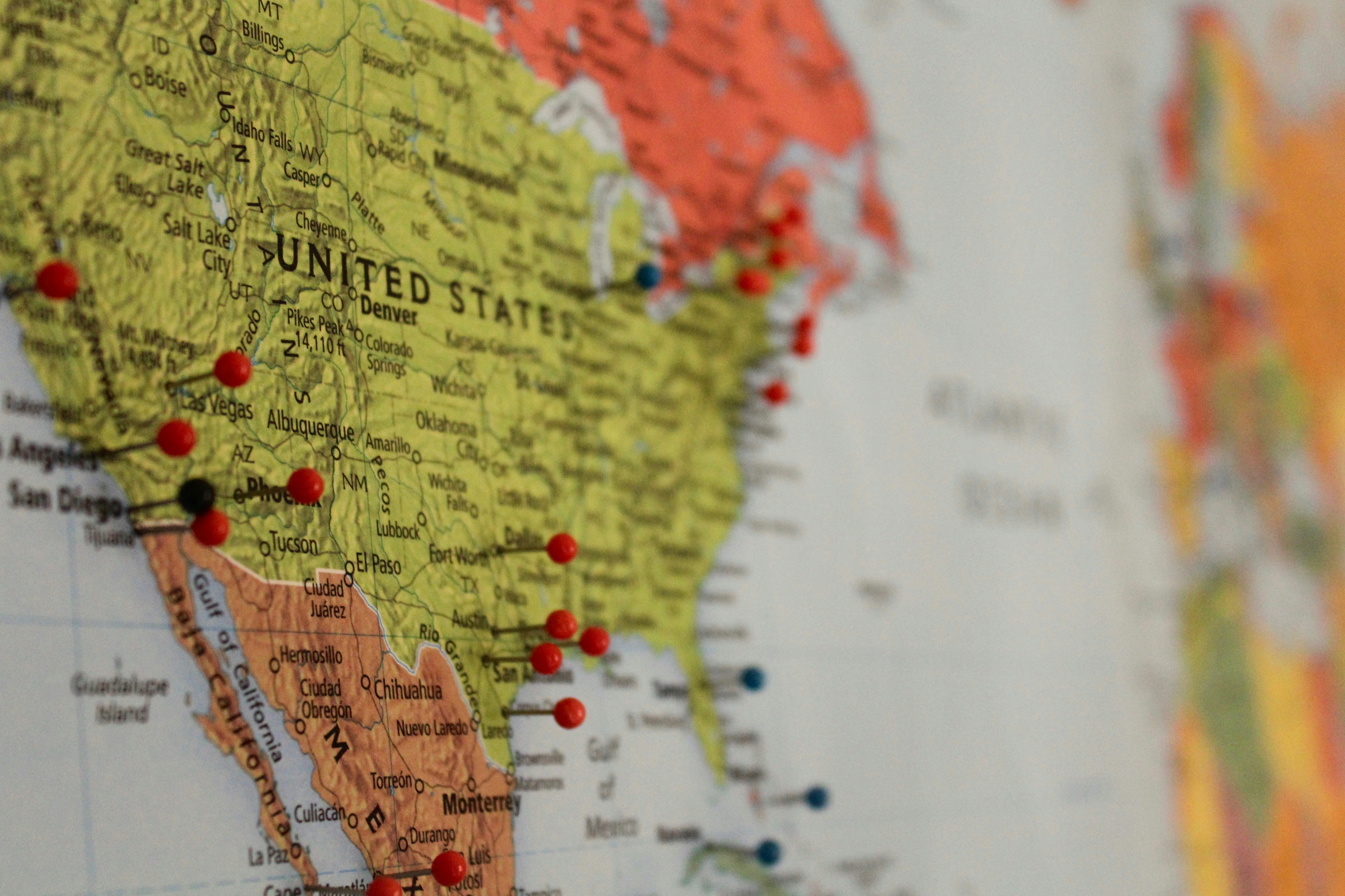
Stock photograph. Photo by Morgan Lane on Unsplash.